

Eil or Lager?
A general introduction to the differences
"We only have aisles." "Be! But I want a beer!"
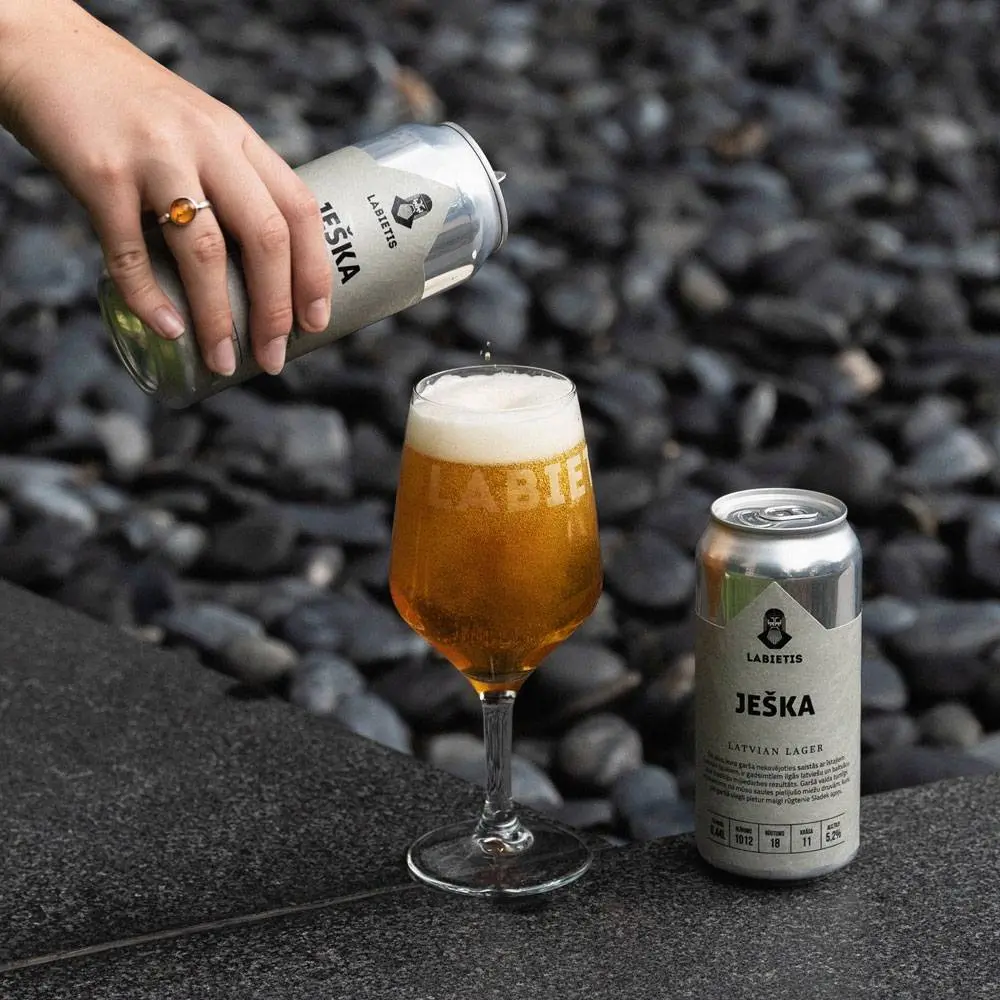
Continuing on the topic of foreign words, let’s briefly and concretely distinguish between eil and lager. Some of the pub’s patrons are still in solemn awe when they hear that Labietis only brews ale. That charming word that rolls off the tongue – “eils”. It makes you expect something unusual to happen in tulīt. Something that comes from the legends of the Round Table and the clouded face of Lon-don Other has an unconcealed disgust. Eils? What Eil?!
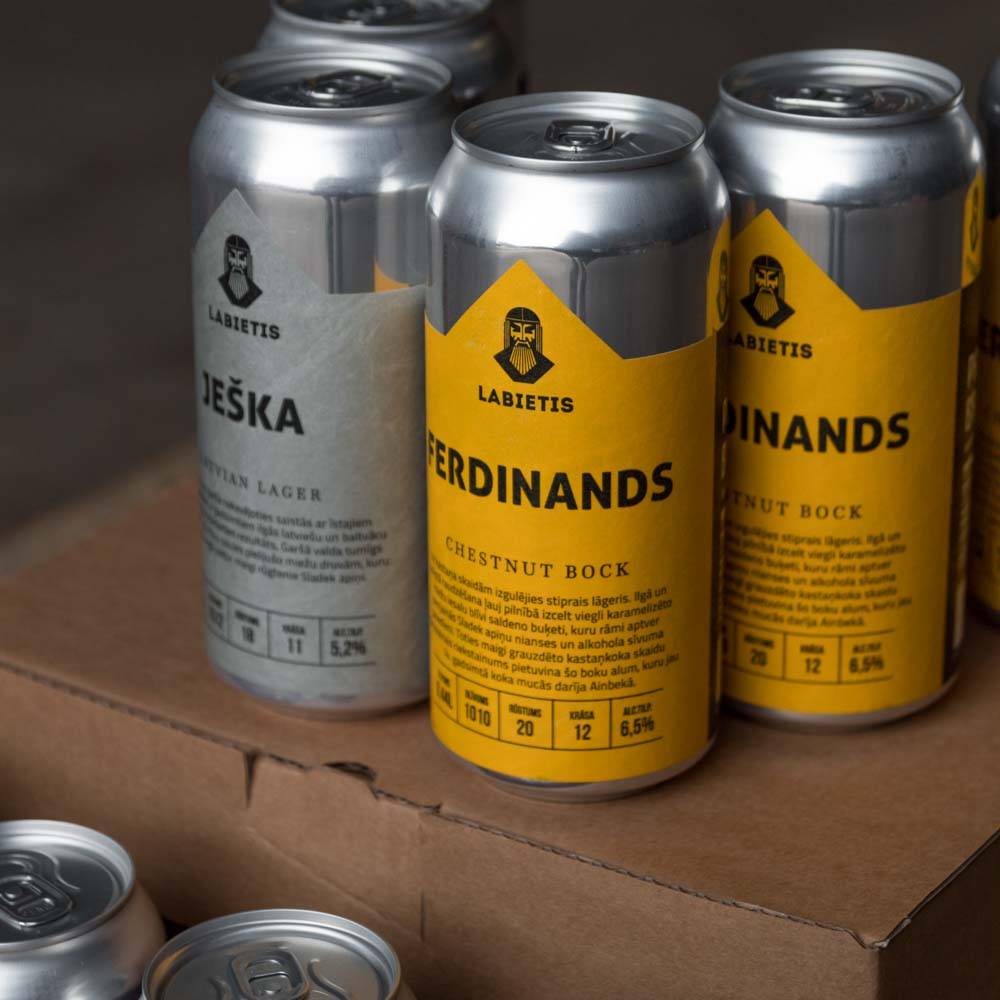
He has come for a refreshing hoppy brew, not the slick British Isles booze – ale. The English can’t brew beer properly! In fact, both complicate life unnecessarily! Both ale and lager are ali. Both can be bitter, sweet, dry or cloying (as well as all the other adjectives) depending on the ingredients and the skill of the brewer. The only and main difference is the yeast strain used, Saccharomyces cerevisiae or Saccharomyces uvarum (known as Saccharomyces carlsbergensis before scientists tasted Carslberg and decided to cut all ties with the term) These long Latin words also give rise to all the different characteristics.
Hot vs cold - the role of temperature in the taste of beer.
The main difference between ale and lager is the fermentation temperature. Ales operate at room temperature between 12 and 20 degrees (when fermenting saison-type beers, the temperature can climb to 30 degrees, creating the defects that the Belgians christened the traditional taste). At this temperature, more oils and esters are released, creating a ‘wide’ bouquet of flavours. This is why the first sips can seem intense, even overdone, to an inexperienced ale drinker. Lager came later, when innovative cellar-digging technologies allowed experimentation with fermentation at lower temperatures (between 7 and 12 degrees). Low temperatures helped to produce a ‘cleaner’ beer, lighter in taste and crisper in the mouth. There is no right or wrong answer to this question. It is like comparing whether Cielaviņa is better than the wafer cake Squirrel. Both are desserts, both count as cakes, but they satisfy very different tastes.
It all started with an ale.
Ever since the ancient Proto-Caldari (proto – before) inadvertently contaminated wort with yeast and started the millennia-old culture of brewing, people have been drinking ale. Ancient Egypt, Divupe, the Chinese Empire – every civilisation worth talking about brewed beer, and the only yeast that could ferment wort before ice cellars is ale. To talk about the history of ale is to talk about the history of all brewing up to 16th century Bavaria, when the first lager-like brews appeared. Ales are beer in its most traditional and ancient form. In marketing parlance, an ale is the real-original-traditional-ancient beer. The whole world, including the Czech Republic and Germany, drank ales until Bavarian purity began to limp.
How the German Dukes regulated the Lager.
Despite German precision, the 16th century. Bavaria suffered from a nasty problem: summer ales often tasted sour and otherwise defective. Flavour-tasting bacteria broke inside the open fermentation tanks, spoiling the beer. Brewers tried to remedy the situation in true craft beer tradition with sawdust, soda water, cattle bile and even chicken blood, but the ales still tasted strange. This lack of quality visibly damaged the Bavarian court shish kebab parties and boys’ nights out. Unlike the Belgian summer workers (saisoners), theBavarian patricians did not want to tolerate the taste of summer beer.
The presence of chicken blood was also frankly humorous, so in 1487 Duke Albert IV of Bavaria ordered brewers to publicly swear off experimenting with animal liquors and to use only hops, water, yeast and malt (this later led to the notorious German Beer Purity Law in 1516). Despite food and veterinary safety regulations, the beer continued to sour and taste unacceptable to the German nobility. For almost a hundred years, wise heads complained, punished and regulated, but the beer didn’t get any better. Only Duke Albert V showed some character, caved in and decreed that Bavarian brewers would no longer brew beer in summer. If they can’t, they shouldn’t! The court applauded, but the brewers scratched behind their ears and wondered what to do.
Just as the Belgians made summer beer blemishes a traditional taste, German brewers embraced the new fashion as an important element of brewing culture. From now on, Bavarian brewers only brewed beer from autumn to spring. The desire to drink beer all year round led brewers to break their heads about maturation, which developed the use of ice cellars and mountain caves for storing beer. Longer storage also meant that beers usually contained a moderate level of alcohol (6-7%). In sum, this process was christened ‘lagerisation’ from the German word‘lagern’ (to store). This maturation made the beer taste ‘cleaner’ and allowed the yeast to settle neatly at the bottom of the barrel – making the beer clear and light. But this was not lager as we know it today! The Bavarians did not brew a traditional golden-luxe-premium lager, but rather a dunkel – a bronze-coloured beer with distinctly caramelised notes, still based on a type of ale yeast. The lager came from afar.
Strangers - the arrival of the modern lager
Despite the marketing material for consumer beers, lager does not come from the family brewery, the Czech Republic or Bavaria. Scientists believe that the lager yeast, Saccharomyces Eubayanus, was born in Patagonia in southern America – 11 000 kilometres from the Bavarian mountains. The researchers found that this yeast has a 99.5% match with the non-eagle parts of the Bavarian yeast. A more similar yeast variety has still not been found in the wild. It is not clear exactly how this yeast travelled to Bavaria to mate with the local strains, but transatlantic shipping certainly helped – the yeast could have taken up residence in fruit, fermented drinks, the oesophagus of flies and even wood. This modern breed of lager was able to live comfortably at low temperatures, so that in 1894. In Munich (together with British malting technology), the first extra-lactic lager was created. Munich’s hippest local of the time, Spaten, started a new trend for Helles-type beers – lighter, fresher and crisper than their amber contemporaries.
California wants its beer!
Experiments with temperatures don’t end with the development of the Lager. Once a stable variety of lager yeast was established, there were craftsmen who found the rules challenging. When 19th century American brewers heard that lager fermented at temperatures of up to 12 degrees, they pioneered the spirit of boiling beer, adding lager yeast and stubbornly leaving it in the heat. When their German colleagues objected: ‘Aberdas ist kein lager! “Eu, Jacks, you’re brewing our beer wrong!” The Americans replied with something about freedom, penis size and a full tank of hops. The result was Steam Beer, a special breed of American lager, distinguished by a distinctly hoppy flavour and a pungent yeast ester that comes from the lager yeast working faster. Until, of course, Anchor Brewing Co. bought the copyright to the term “Steam Beer” in an American way, turning it into California Common.
Eils
- Top-fermentation (yeast produces a protein layer and mostly thaws at the surface)
- 12 – 20 degrees (with exceptions >30)
- Ales have been used in brewing for the longest time, from the beginnings of fermentation to the present day.
Lager
- Low fermentation (yeast settles at the bottom of the tank)
- Temp. 7 – 12
- First experiments ~15th century, widespread use in the 19th century
- Flavours: crisp, light.
REFERENCES:
http://allaboutbeer.com/article/munich-helles-5/
https://www.history.com/news/lager-patagonian-for-beer
http://www.beer-faq.com/steam-beer/
http://www.beerhunter.com/documents/19133-000255.html
https://byo.com/article/california-common-style-profile-2/